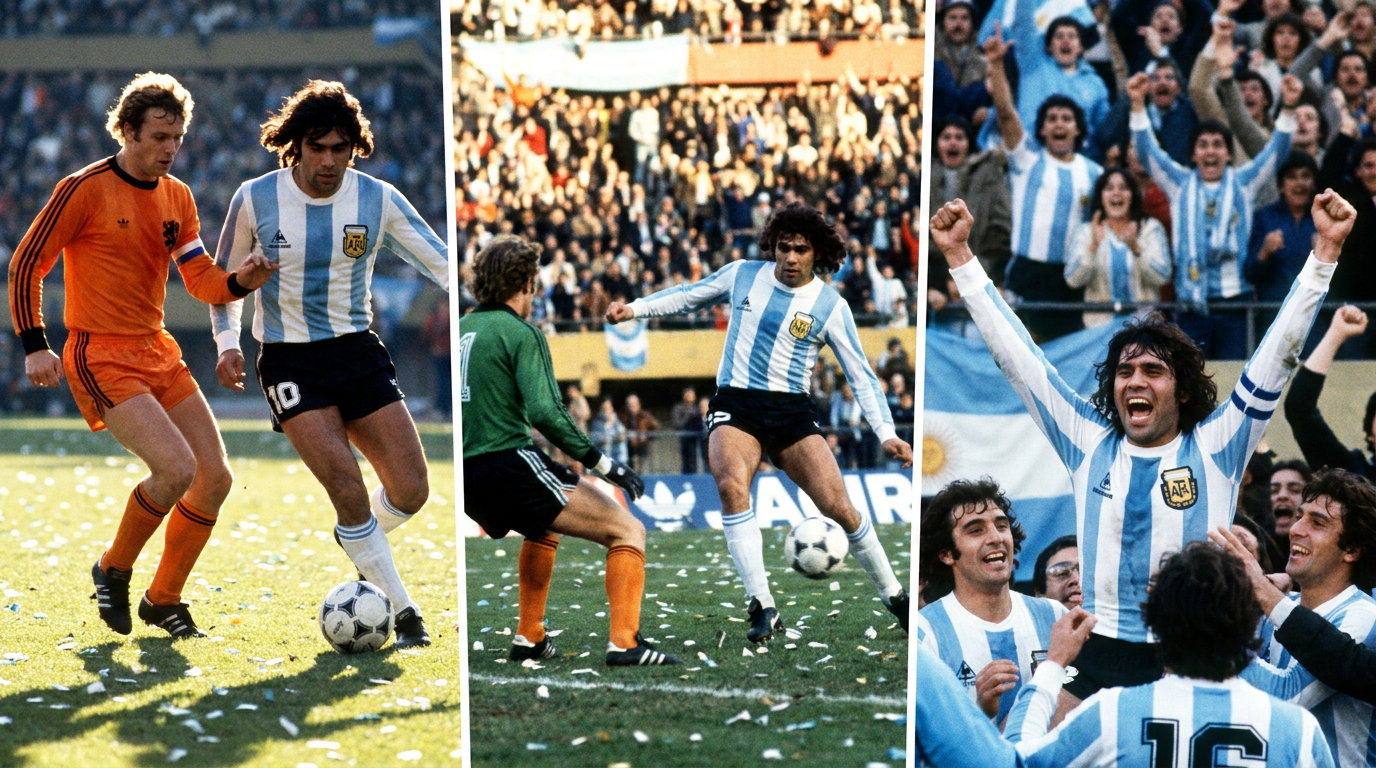
It started, as most of my lifetime’s major milestones do, in a polyester shirt that scratched like a Brillo pad. I have played in three World Cups, spanning five distinct decades, and have had the dubious privilege of winning all three without ever once sitting on a substitutes’ bench. I have aged, gracefully or not, like a fine Malbec if viewed in a dimly lit bodega, but perhaps more like a jar of pickled onions if seen under the harsh stadium floodlights. And no, I am not a time-traveler—I am simply a very fit, very fortunate Argentine who managed to run alongside the only three deities our nation has ever produced: Mario Kempes, Diego Maradona, and Lionel Messi. I cannot explain the physics of my athletic lifespan; I can only describe the sheer, high-altitude anxiety of the Albiceleste locker room.
The 1978 campaign was a symphony of brute force. Mario "El Matador" Kempes was not a footballer so much as a tectonic event that had been mistakenly cleared to play on grass. Playing alongside him required a specific level of grit that modern youth academies simply cannot bottle; the ball was a leather brick, the pitches were mud slick, and the Dutch team in their orange uniforms looked like a squadron of aggressively loud traffic cones. In the locker room, we played cards with heavy, square edges and traded jokes that would probably fail HR standards today. On the pitch, Kempes would look at me, his wild, flying mane defying the specific gravity of a goal kick, and he would grunt. I knew the pass was incoming—usually straight into my shin. We adapted, we bitched, we won on home soil, and I spent the rest of the decade nursing a permanent, rasping cough from the celebratory cigar smoke.
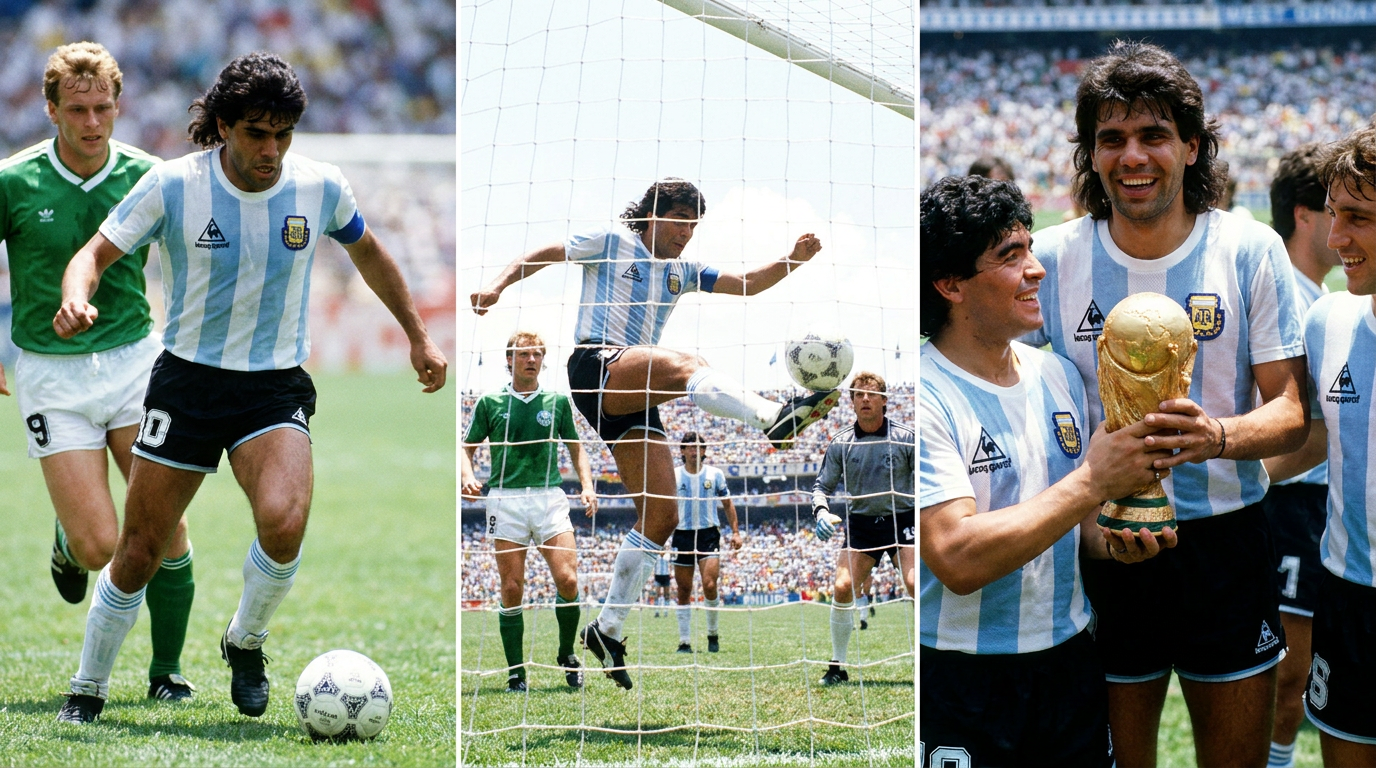
Eight years later, the game had evolved into chaos, and Diego Maradona was the gravitational center of it. He never passed the ball to a teammate because the ball was his friend, and friends don't cheat on each other. Playing alongside him was like being a jazz musician backing up an absolute lunatic on a saxophone. You didn't need a game plan; you just needed to run to the exact coordinate where the ball was *going* to be after he had flicked it past three defenders, a policeman, and a vendor. I was, more or less, a spectator who happened to be wearing the same jersey. The second World Cup was ours, claimed amidst manic fanfare that made the entire tournament feel less like a sporting event and more like a national religious revival. Diego was a genius, but he was also a mischievous imp of a human being who could tie your laces together in the tunnel while simultaneously analyzing the geopolitical weight of the match.
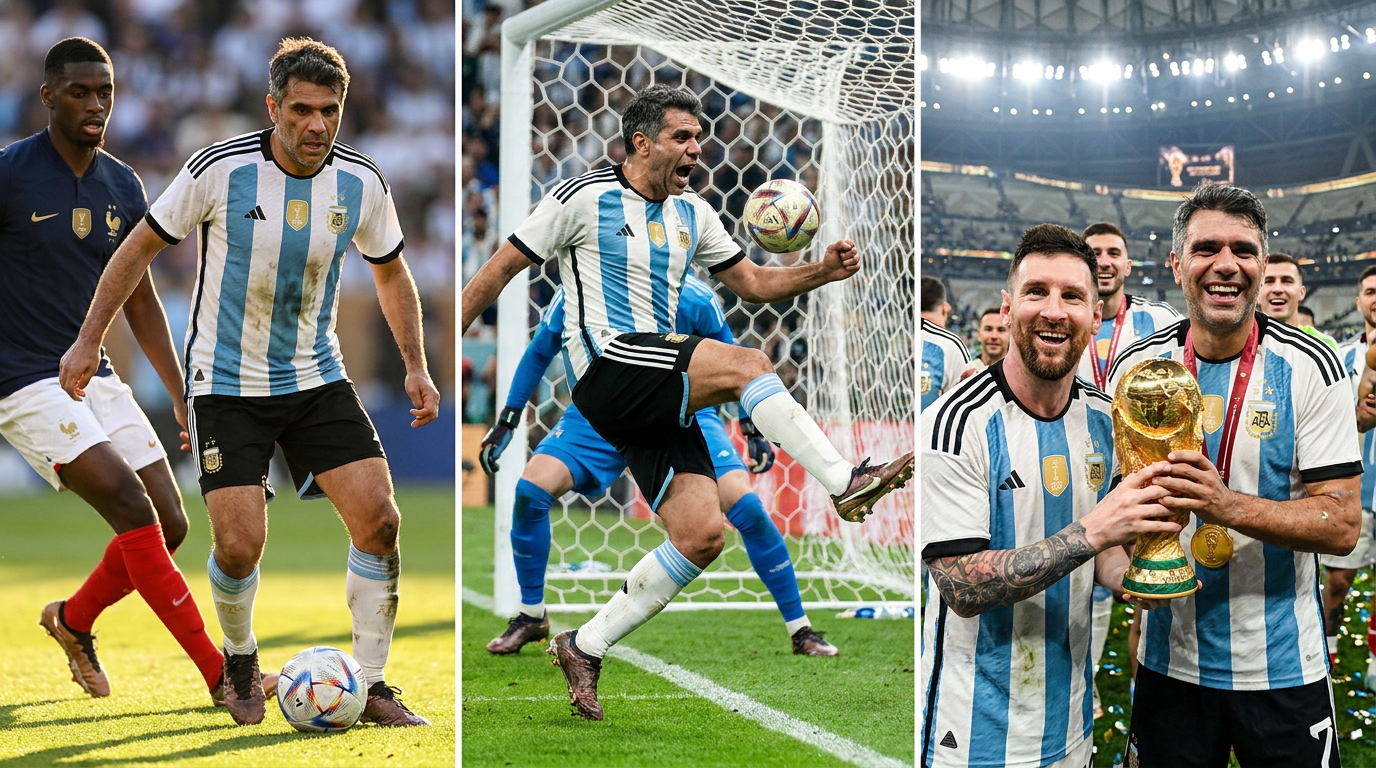
Then, in 2022, I woke up in Qatar. I looked in the mirror and realized, to my existential horror, that I was now older than the fathers of some of my teammates. But Lionel Messi remains the same ethereal anomaly he has always been. He moves with a silent, almost depressive brilliance, looking perpetually like a man who is being billed for a masterclass he never asked to give. Playing with him is a profoundly humbling experience; you realize that your entire existence on the pitch is a cosmic joke because if you were dead, he could still win with ten men. The tournament itself was a nail-biting masterpiece of cardio. The final against France was less of a football match and more of a sitcom episode where the villain keeps coming back to life, wreaking havoc on your cardiovascular health. We held on—because of course we did—and I found myself, miraculously, sharing a hug with Messi while hoisting the golden trophy for the third time.
So here I stand, a living anomaly of the FIFA database. Three winning generations, three completely different hairstyles, and a bicep that has held the World Cup aloft three times—which, incidentally, should have triggered a wellness check from an orthopedic chiropractor years ago. What unites the three titans is not just the beautiful game, but the sheer, unadulterated emotional masochism of being Argentine. We cannot simply win; we must flirt with disaster, defeat our own ghosts, and finally do it in the most dramatically terrifying way possible. As I look back on the muddy slides of 1978, the divine chaos of 1986, and the hyper-sterile, VAR-obsessed tension of 2022, I realize I am less of a soccer player and more of a time-traveling mascot for the national psyche. I don't know if I am a lucky charm, a ghost, or the high-fructose corn syrup of football history, but I wouldn't trade a single sore hamstring. Next time, however, I really must ask the AFA for a locker room with a better ventilation system—the champagne stains from half a century are starting to leave a permanent mark on my jersey.