Is she laughing? I asked Diego. My most sincere apologies to your missus. I can only assume the involuntary shaking of the bed frame at 2 AM is a small price to pay for the vindication of a defender's untold lore. My own wife long ago stopped asking if I *actually* played in these matches. She now just sits across from me at breakfast, hands me a cup of coffee, and says, "Tell me about the weirdo with the video tapes again." She knows her role in this marriage is to validate my fictional triumphs.
Let’s continue our journey through the Argentine footballing asylum, specifically focusing on the sheer, unadulterated weirdness of the men who shared the pitch with me—and the mad scientists who coached them.
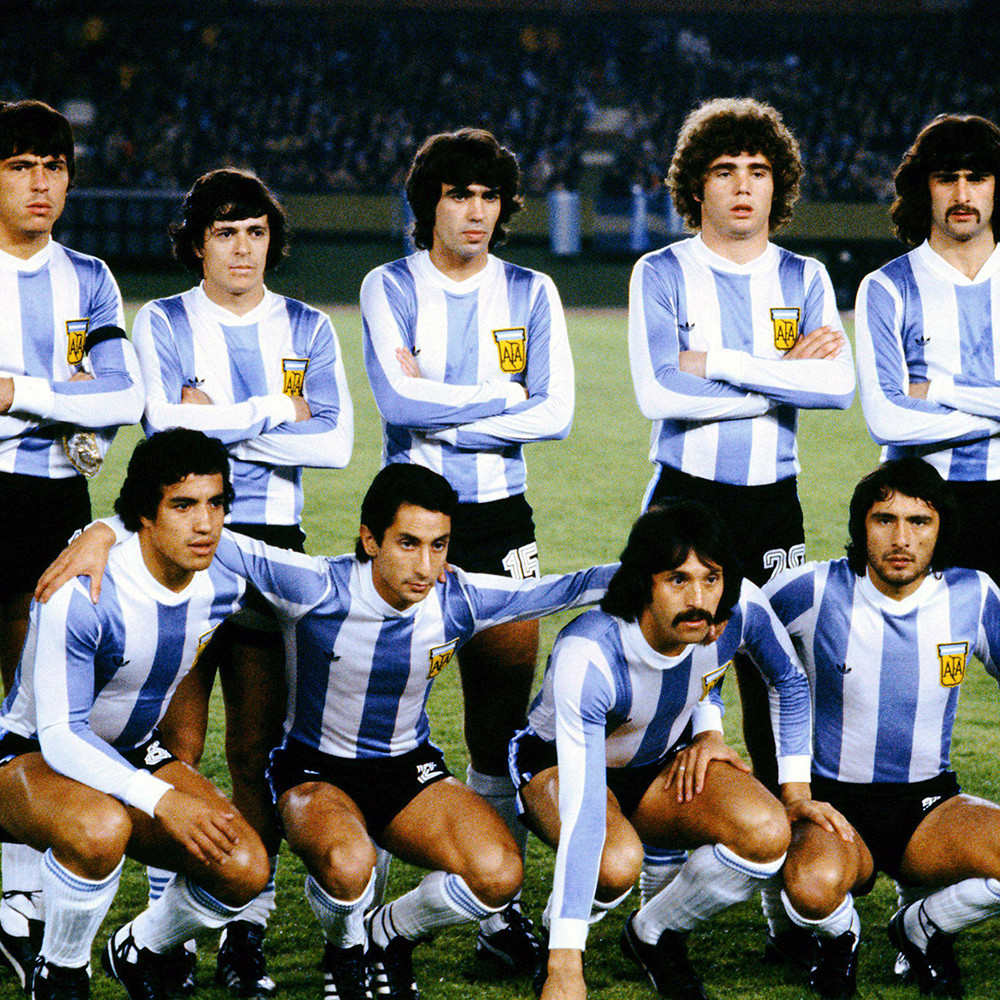
The above picture, they cropped me out as they always did!
We must start with the "lovable weirdos" of the locker room because, frankly, they were the glue that held the paranoid ego of the star players together. René Houseman was less a footballer and more of a gremlin who had been given a contract. Tiny, twitchy, and fueled by pure, unadulterated chaotic energy, he would hug the right touchline like it owed him money. During halftime of a 1978 group match, he actually argued with a stadium security guard about the nutritional value of a specific brand of salami. He didn't speak to me; he spoke *at* me, usually while performing a series of step-overs on a stray water bottle. He was our mental mascot. Then there was Daniel Bertoni—my defensive partner, the cryptid of Argentine football. Bertoni possessed the emotional range of a feral cat in a thunderstorm. He wouldn't talk, he wouldn't hug, he would just stare. In 1978, we shared a hotel room for six weeks. I am fairly certain I was rooming with a mannequin designed by a Soviet robotics lab. Yet, out on the grass, he was a lanky, lethal predator who somehow channeled that absolute void into perfectly timed runs. Weird, yes. Effective, terrifyingly so.
But the true lunacy stemmed from the dugout. Lefty Menotti was a bohemian poet who communicated in metaphors. He would walk into the dressing room, light a cigarette that smelled like a campfire, and calmly explain that we were playing "for the soul of the people." He was a hippie who somehow won a World Cup. You cannot script that. However, his successor, Carlos Bilardo, took the team's psychology and threw it into a blender, hit puree, and then refused to turn it off. The man didn't just show video tapes; he *worshipped* them. During the '86 buildup, we would sit in a darkened, sweltering room, watching grainy footage of an opposing team's midfield triangle from 1982, played on loop until the entire defensive line was hallucinating. He would pause on a throw-in, lean in with the intensity of a neurosurgeon, and whisper, "Look. The ball has a tiny scuff mark. That means they are going to cross early." We didn't know if he was a genius or if he was the footballing equivalent of a roadside psychic, but we won, and I still can't look at a VHS player without feeling a cold sweat trickle down my spine.
Now, let us cross the chasm of time to the modern, "enshittified" 2022. While the ball is synthetic, the pitches are hyper-engineered, and the constant VAR reviews make the game feel like a bureaucratic audit, the players remain beautifully broken. Ángel Di María, bless his heart, is a human faucet. He cries before warmups. He cries after a good tackle. He cried when they played the Argentine anthem, and I am fairly sure he cried when he saw the dessert menu at the team hotel. I love the man, but playing beside him meant I had to run twice as hard just to make up for the tears blurring his vision. And then there is Lisandro "Loco" Martínez. My current defensive partner who operates on a single frequency: absolute, unhinged rage. He doesn't just tackle opponents; he seems to emotionally eviscerate them. In the final against France, he screamed at the goalpost for not being in the right position. He is a lunatic in the best way possible—the perfect complementary chaos to Leo Messi's serene, silent stoicism.
Through it all, the one constant has been the existential loneliness of the central defender. During the 1970s, I was a battering ram. In the 1980s, I was a paranoid shadow. In 2022, I am a stagehand. Leo doesn't shout or demand; he simply looks at you with those melancholic eyes, and you know exactly where to run. He is a silent director operating a grand orchestra, and I am the timid percussionist hoping I hit the triangle on the right beat.
I realize now that my career isn't a sporting achievement; it is a 44-year ethnographic study of genius, psychosis, and crying wingers. I will gladly write this series for as long as you can stomach it. We can call it *"The Backline of Genius: How I Survived Three Decades as Argentina's Human Shield."*